Profile
The southern African country of Zimbabwe: home to the grand Zambezi River, one of the seven wonders of the world – the Victoria Falls, the second largest man made lake – lake Kariba, as well as the third largest national park in Africa – the Hwange National Park. It is regarded as one of the friendliest, safest, and most convenient countries to visit in all of Africa.
Operating in two massive wild and remote regions of this incredible country is the Hwange Safari Company, which offers African big game hunting at its very best.
The Hwange Communal Hunting area
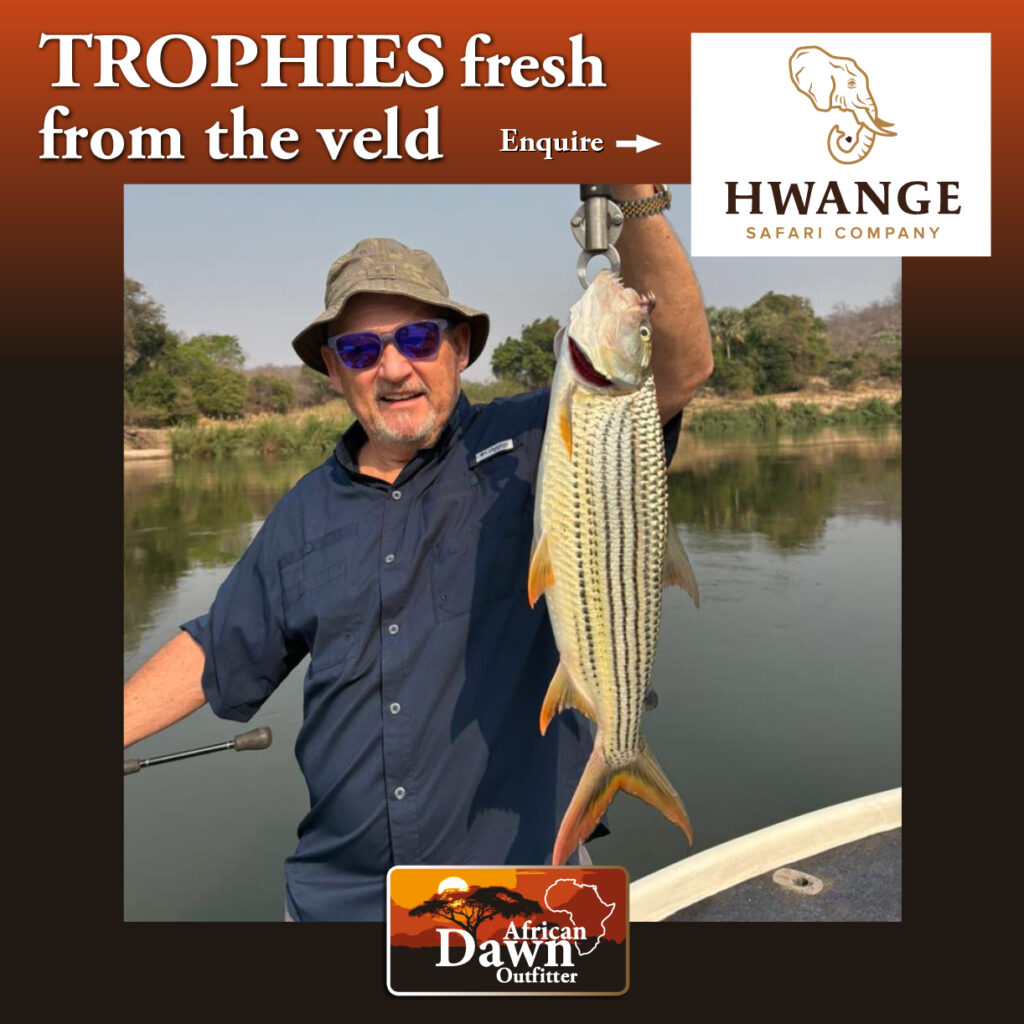
The province of North Matabeleland is a community area run by the Hwange Rural District Council. Comprising of community land, Kamativi Stateland and Stateland V, this lease allows Hwange Safari Company to conduct hunting, fishing, and other nonconsumptive safaris.
The area consists of over one million acres, with the northern boundary being the Zambezi River. The main river that flows into the Zambezi and through the area are the Matetsi, the Gwaii, the Lukosi, the Nyantue, and the Shangani River.
The area is made up of a huge diversity of habitats including Kalahari sands close to the Hwange National Park and rocky hills (or kopjies, as they are known). Inland from the Zambezi, vast open grasslands and lush riverine thickets along the seasonal tributaries of the Zambezi River are abundant. These varied ecosystems are home to an incredible variety of game, bird, insect, and reptile life.
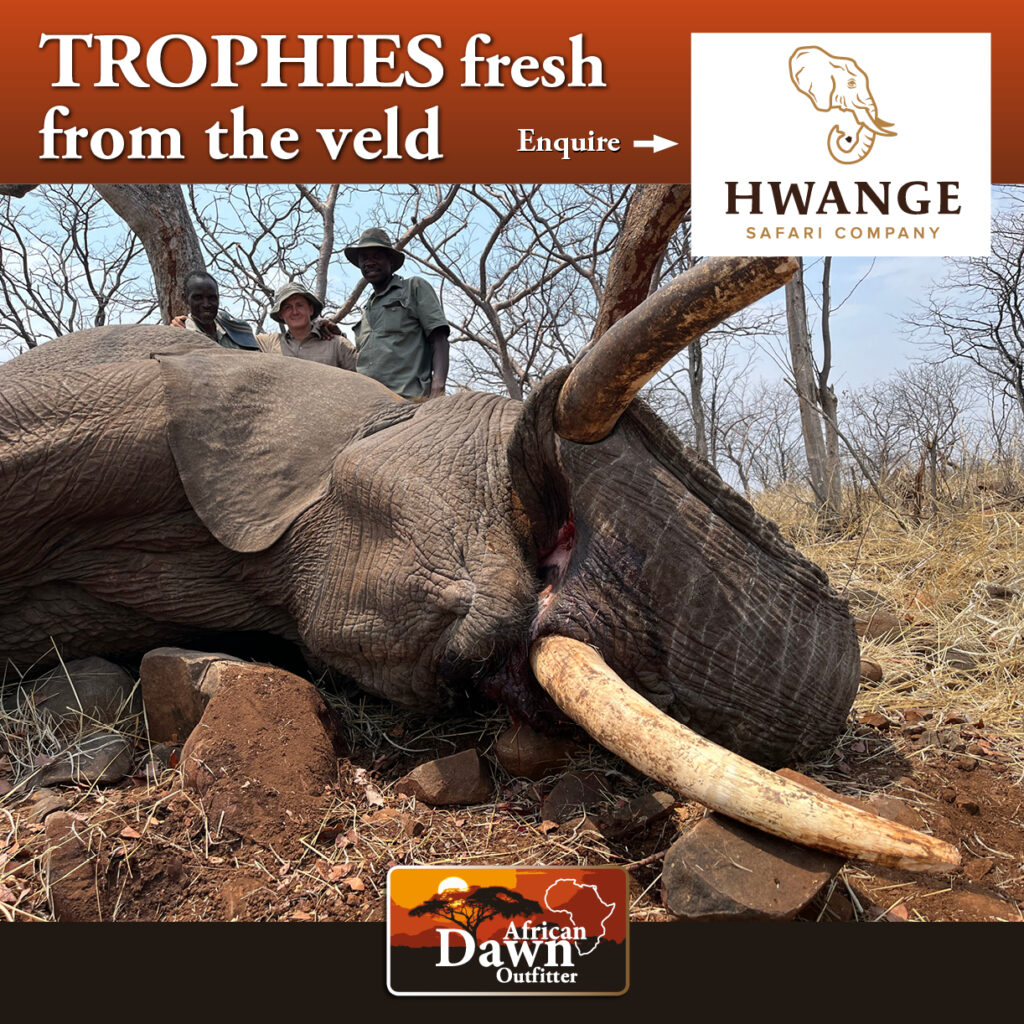
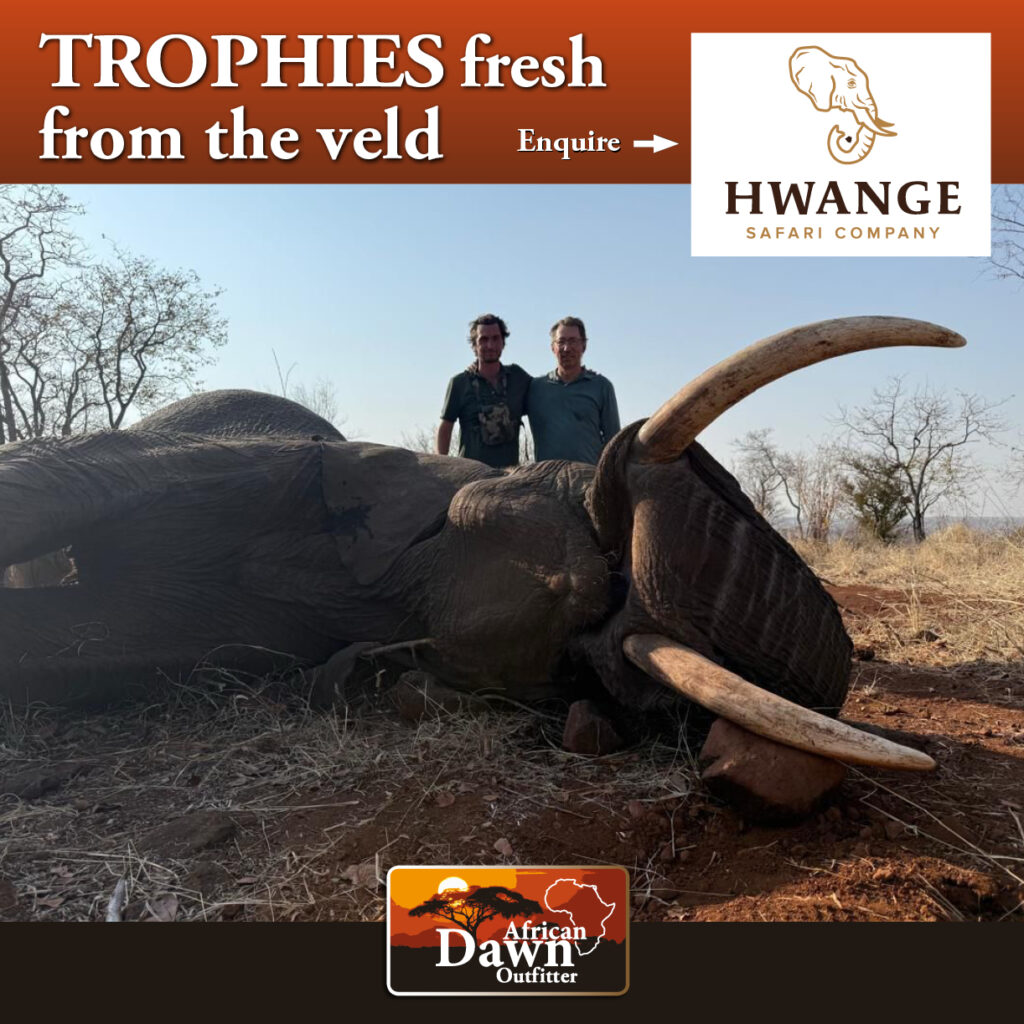
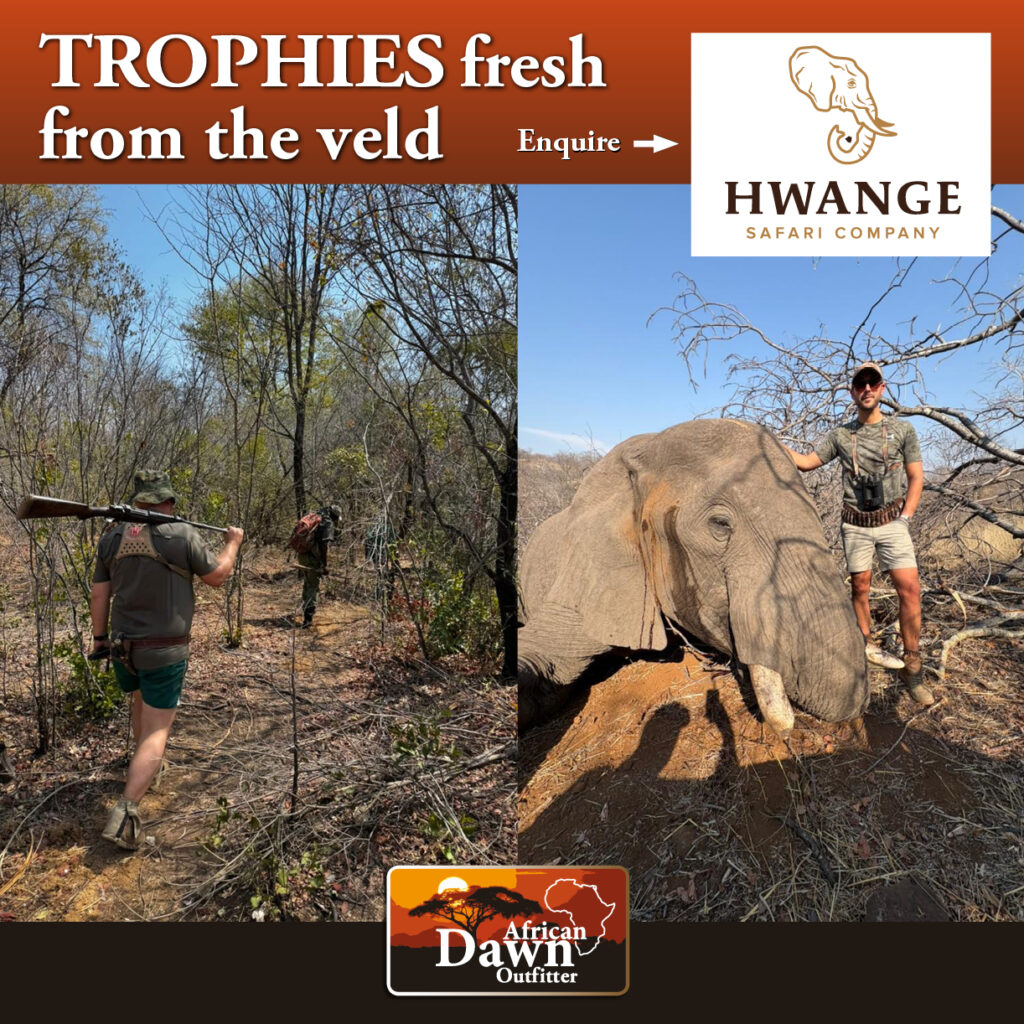
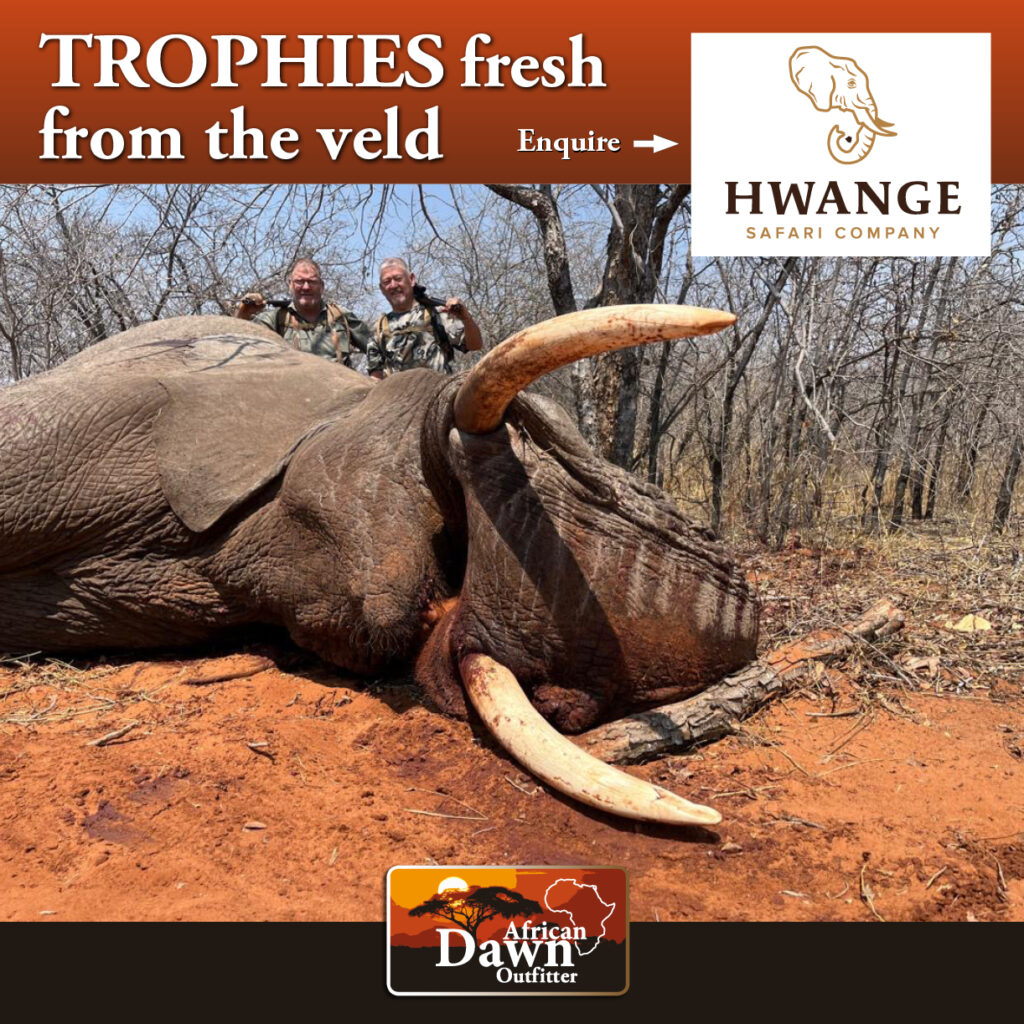
Hwange National Park has one of the densest populations of elephants in Africa, over 55000 roam the massive game reserve. Due to this overpopulation, huge numbers move from the park and into the neighbouring safari areas and communal lands, with one such area being the Hwange communal area. Due to the varied habitats and abundance of water, many of these elephants take up residence in the Hwange communal area.
Being a community area, the rural villagers are dependent on farming as their main food source. Crops; such as corn, barley, sorghum, and a variety of vegetables are grown during the wet season – November through to March. These crops attract, what locals and the wildlife. A hunting quota of elephants, as well as other problem animals, such as crocodiles, hippopotamuses, lions, and leopards, have been set aside for foreign sport hunters, which in turn has several benefits to the community.
1. Creates jobs in safari camps; game scouts for anti-poaching and educating the people of the importance and value of wildlife.
2. The harvested animals provide much-needed protein, which is a rare commodity in these remote regions of Zimbabwe.
3. Financial benefits of the harvested elephants help advance the area. It allows schools and health clinics to be built, the establishment of boreholes (wells) to provide safe and clean drinking water, and the erection of fences around the irrigated crop fields which provides more food security from the wildlife.
Social Media
YouTube: @HwangeSafariCompany
Facebook: www.facebook.com/people/Hwange-Safaris
Instagram: www.instagram.com/hwangesafaris